
Why Your Charging Cables Keep Breaking
Why Your Charging Cables Keep Breaking (And How to Fix It for Good)
We've all been there. You're about to head out, reach for your charging cable, and discover it's frayed, exposed, or just... dead. Again. You bought it three months ago. Maybe less.
So what's going on? Why do charging cables seem to have the lifespan of a mayfly?
The Real Reason Cables Fail
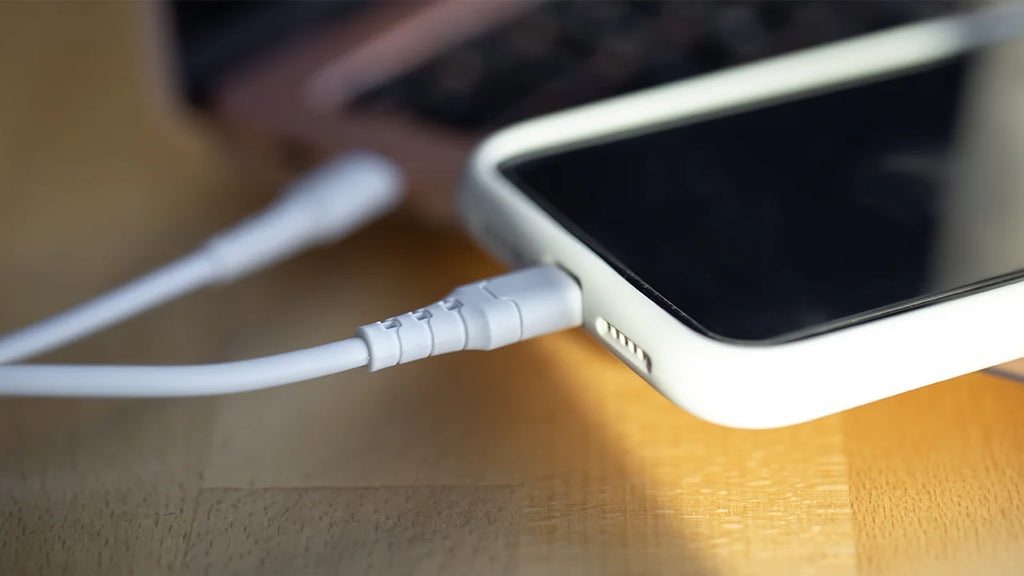
Most cable failures happen at the same two spots: right where the cable meets the connector, and where it plugs into your device. These stress points bend constantly as you use your phone whilst charging, coil the cable for storage, or yank it out without thinking.
Standard cables use basic plastic or rubber coating that can't handle this repeated flexing. The internal wires start to break down, the coating cracks, and before you know it, you're looking at exposed wiring or a cable that only works if you hold it at exactly the right angle.
The Braided Difference
There's a reason more people are switching to braided cables, and it's not just because they look better (though they do). Braided cables wrap the internal wires in a fabric mesh that distributes stress evenly across the entire cable instead of concentrating it at those failure points.
Think of it like the difference between a single thread and a rope. The rope can bend, twist, and flex without breaking because the load is shared across multiple strands.
Our USB-C to Lightning 20W Braided Cable, USB to Lightning 20W Braided Cable, USB to USB-C 20W Braided Cable, and USB-C to USB-C 240W Braided Cable all use this reinforced design. We've tested them with thousands of bends, and they hold up where regular cables give out.
But Wait, There's More to It
Cable durability isn't just about the coating. The connectors matter too. Cheap cables use thin metal contacts that wear down quickly or lose their grip. Quality cables use reinforced connectors with better metal contacts that maintain a solid connection even after months of daily plugging and unplugging.
The wire gauge inside matters as well. Thinner wires charge slower and generate more heat, which accelerates degradation. Our cables use proper gauge wiring that handles 20W (and up to 240W for USB-C to USB-C) without breaking a sweat.
How to Make Any Cable Last Longer
Even the best cable needs a little care:
Don't yank it out by the cord. Always pull from the connector. Yes, it takes an extra half-second. Your cable will thank you.
Avoid tight coiling. Wrapping your cable super tight around your hand or a charger creates stress points. Loose loops are fine.
Use cable clips for organisation. Instead of wrapping cables tightly, use something like our 12PCS Magnetic Cable Organisers Clips to keep them tidy without damaging them.
Unplug when not in use (sometimes). Leaving cables plugged into power sources 24/7 isn't necessarily bad, but if you're not using them, unplugging reduces unnecessary wear on the connectors.
The Bottom Line
You can keep buying cheap cables every few months, or you can invest in ones that actually last. A braided cable costs a bit more upfront, but when you're not replacing it three times a year, it's actually cheaper in the long run.
Plus, there's something satisfying about having gear that just works. No fishing for the "good cable" in your drawer. No wondering if this one will make it through the week.
Ready to upgrade? Check out our full collection of braided charging cables and stop playing cable roulette.